Factory-Built Modular Homes: Costs, Timelines, and Local Benefits
Modular homes—factory-built dwellings assembled off-site—are transforming modern construction. From single-family residences to multifamily projects, modular construction offers speed, cost-efficiency, and sustainability, making it a growing trend in the global housing market.
©Bloomberg Television: How Sweden’s Housing Factories Could Fix US Home Prices
What Are Factory-Built Modular Homes?
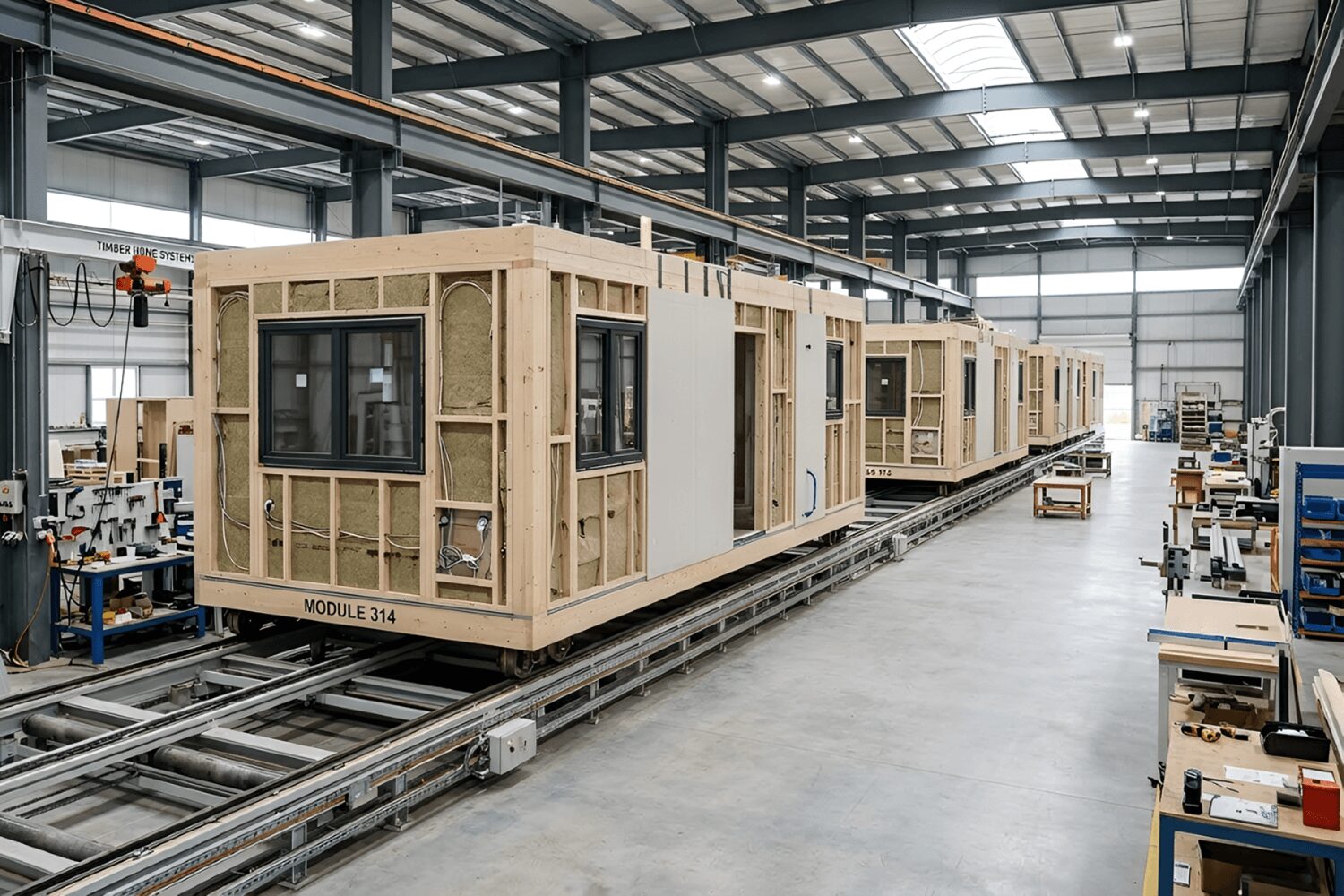
Modular homes are built in sections—or modules—in a controlled factory environment and then transported to a building site for assembly. This approach differs from traditional on-site construction, allowing for:
- Simultaneous workflows: Site preparation and module fabrication happen at the same time.
- Quality control: Factory conditions minimize errors and material waste.
- Custom designs: Homeowners and developers can choose layouts, finishes, and energy-efficient features.
Costs of Modular Homes
While costs vary depending on size, design, and materials, modular homes often provide 10–20% savings compared to traditional construction due to reduced labor and faster build times.
Cost Components
- Factory Fabrication – Materials and assembly in a controlled environment.
- Transportation & Assembly – Shipping modules and connecting them on-site.
- Site Preparation – Foundation, utilities, and landscaping.
- Interior Finishing – Flooring, cabinetry, and appliances.
Overall, modular homes allow developers and homeowners to manage budgets more predictably while maintaining high-quality standards.
Construction Timelines: Speed as a Key Advantage
One of the biggest benefits of modular homes is the shorter construction timeline. Modular projects can often be completed 30–50% faster than traditional builds, thanks to the overlap of site preparation and off-site module fabrication.
Typical Timeline
- Design & Permitting – 4–6 weeks
- Factory Fabrication – 8–12 weeks
- Site Preparation – 2–4 weeks (can happen simultaneously with fabrication)
- Module Delivery & Assembly – 1–3 weeks
- Finishing & Inspection – 2–4 weeks
Faster timelines reduce financing costs and allow homeowners and developers to occupy or sell properties sooner.
Benefits Driving the Modular Home Trend
Modular construction is appealing for multiple reasons beyond speed and cost:
- Reduced Waste – Factory production minimizes excess materials.
- Sustainability – Many homes use energy-efficient materials and designs.
- Predictable Quality – Controlled environments reduce defects and delays.
- Flexibility – Modular homes can be scaled or modified more easily than traditional builds.
- Expanded Applications – Suitable for single-family homes, multifamily apartments, student housing, and commercial projects.
Case Studies: Modular Homes in Action
To understand how modular homes work in real life — and why they’re gaining attention — here are notable examples from different regions. These case studies show how modular construction can be used for everything from urban apartments to student housing.
Carmel Place — Modular Multi‑Unit Housing (New York City, USA)
One of the most famous examples of modular residential construction is Carmel Place in Manhattan, New York City. Completed in 2016, this nine‑story apartment building was assembled using prefabricated modules. The modules were built off‑site, transported, and stacked together in just three and a half weeks before the exterior was finished onsite.
Why it matters:
- Showcases modular construction in dense urban environments.
- Demonstrates that modular methods can be used for multi‑family residential projects with long‑term occupancy.
National Lab Case Study — Model/Z Modular (South Los Angeles, USA)
In South Los Angeles, a case study analyzed the deployment of locally manufactured modular housing units designed to address affordable housing shortages. The Model/Z modular units were produced in a large factory and used in projects of up to nearly 200 units. The study found substantial waste reduction and improved material use efficiency compared to traditional construction, thanks to precise manufacturing and streamlined logistics.
Key takeaways:
- Modular methods can reduce waste and costs through controlled factory processes.
- Scaling up production enables delivery of hundreds of units in a coordinated development plan.
Dyson Institute Village — Student Housing Pods (Malmesbury, UK)
In the UK, the Dyson Institute Village near Malmesbury is a modular student housing project built with prefabricated pods. Designed to be assembled quickly, each unit was manufactured in Scotland and then delivered complete with furniture and fittings before being connected together on site. The modular pods are arranged around a communal hub, supporting both living space and social functions.
What’s interesting here:
- Modular units were fully furnished before delivery, speeding up construction and interior setup.
- The design aimed to foster community living among residents.
Wohnregal — Prefabricated Residential Building (Berlin, Germany)
In Berlin, a prefabricated residential building called Wohnregal was constructed using modular concrete elements. The building’s frame was assembled rapidly — taking only about six weeks — using precast structural components that were produced off‑site and then erected quickly at the location.
What this shows:
- Modular and prefabricated elements can be used for efficient multi‑unit housing even with heavy materials like concrete.
- Rapid assembly timelines help reduce labour costs and on‑site disruption.
Historic Modular Homes — Early 20th Century (Connecticut, USA)
The Winslow Ames House and the House at 130 Mohegan Avenue in New London, Connecticut are early examples of modular residential construction. Built in the 1930s, these homes were prefabricated and assembled from modular components long before modern factory processes were common.
Why this matters:
- Demonstrates that modular and prefabricated concepts have deep historical roots.
- Shows how modular construction has evolved from simple early prototypes to sophisticated modern systems.
Why Modular Homes Are the Future
As construction technology evolves, modular homes are increasingly recognized as a smart alternative to traditional building methods. They combine efficiency, affordability, and sustainability, meeting the needs of homeowners, developers, and investors.
The trend toward factory-built construction continues to grow globally, reflecting the demand for faster, greener, and more cost-effective housing solutions.
That said, traditional construction and modular homes are not competing alternatives—they coexist in today’s evolving housing market. Whether you’re planning a renovation or a new build, Tiger Ring Construction provides reliable construction and renovation services across Vancouver and the Metro Vancouver area. Contact us today to discuss your next project.